Every UNIMA leather piece begins long before the first cut — it begins at the tannery, where our head of leather personally selects each full-grain hide. We look for a tight, even grain, a natural shine and no corrected sanding, because a jacket is only as honest as the hide it comes from.
From hide to pattern
Back at the atelier, each hide rests for a day before cutting. Our master cutter lays the paper pattern by hand, working around the natural contours of the skin — the densest areas become shoulders and sleeves, the softest become collars.
- Every panel is cut single-hide, so grain and colour flow continuously around the body
- Stress points are reinforced with a second hidden layer, stitched before assembly
- Edges are skived by hand to a feather taper so seams fold without bulk
The saddle stitch
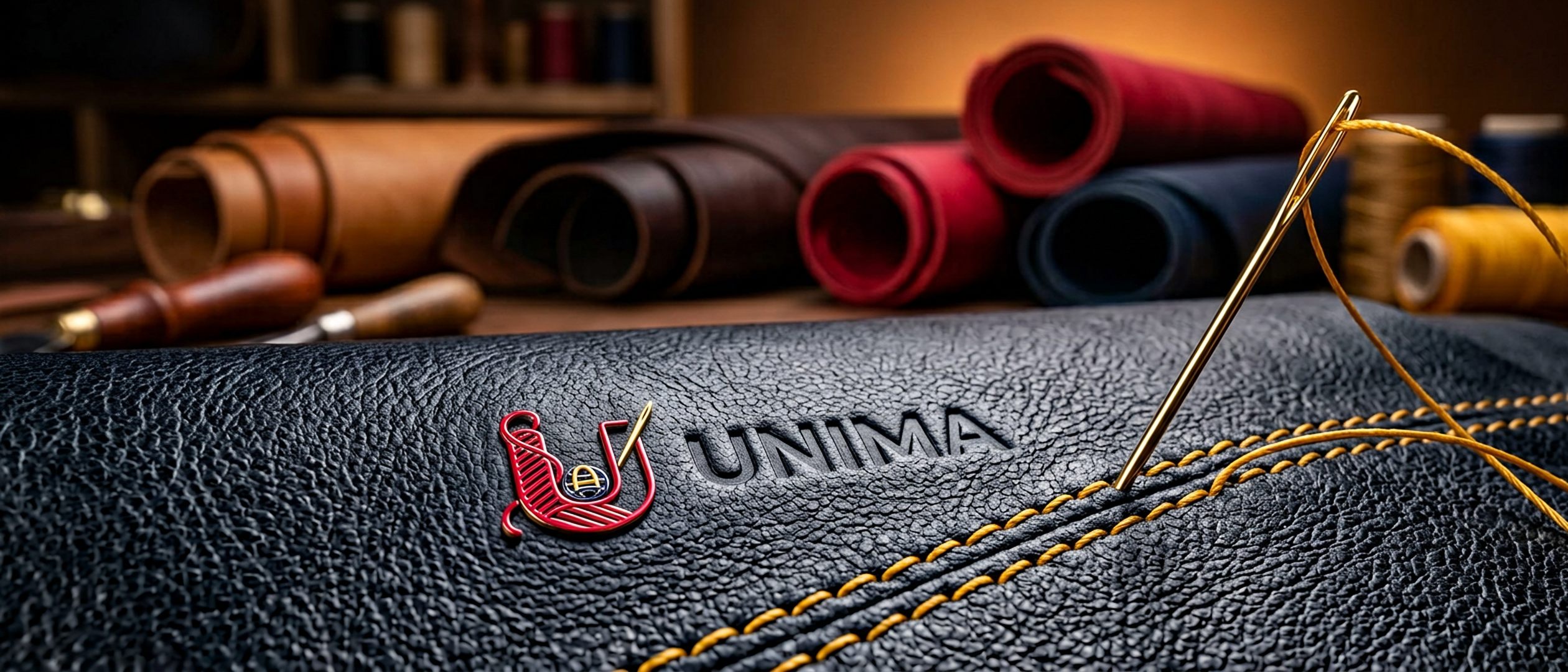
Machines are fast, but for the seams that carry weight we still use the two-needle saddle stitch. It is slower — a full jacket takes our best hands the better part of a day — but if one stitch ever breaks, the seam holds. That is the whole point.
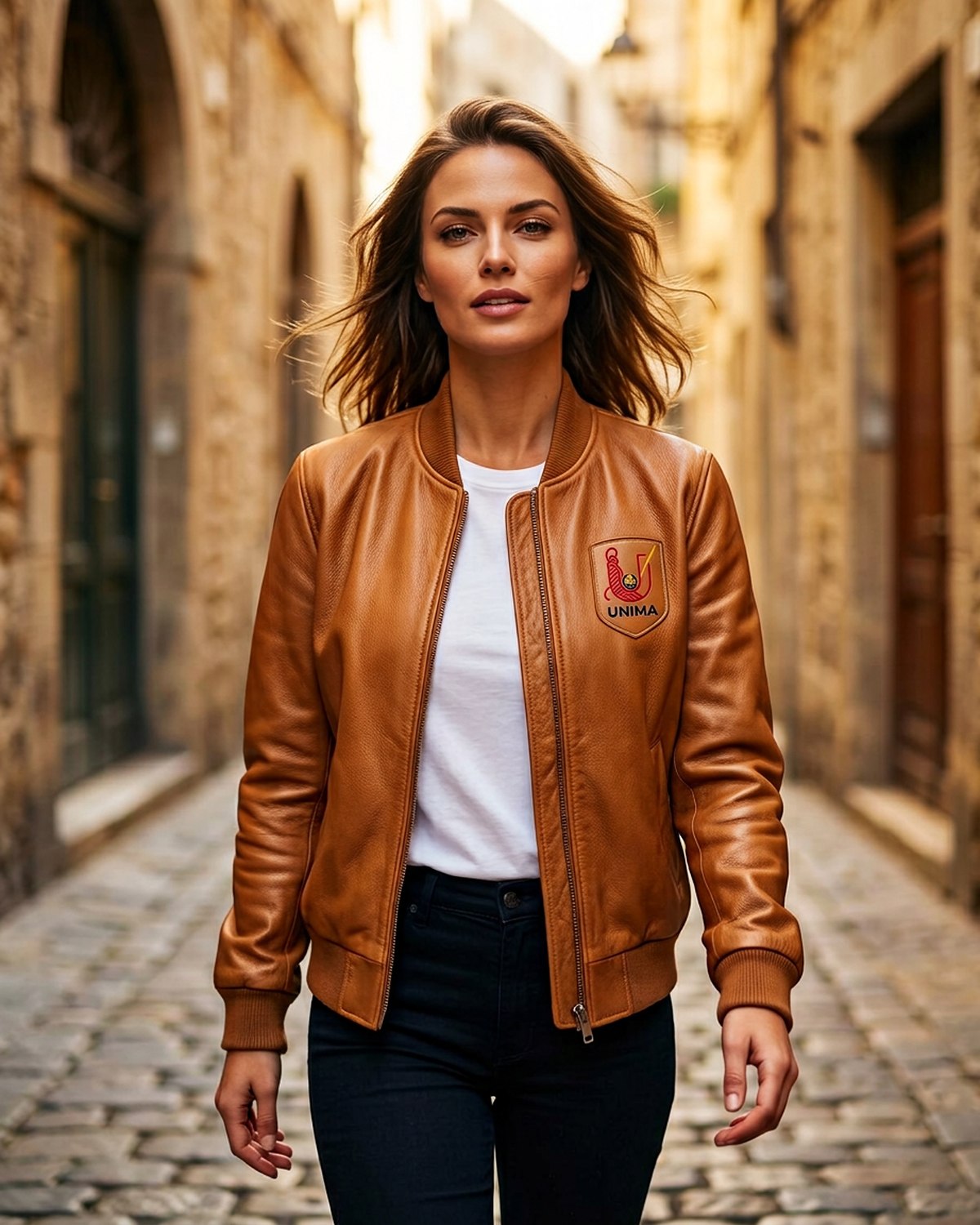
A UNIMA jacket is built to be repaired, not replaced. We keep the panel patterns on file, so years from now we can replace a sleeve or re-line a body and send it back out into the world.
Try it on
The atelier ships worldwide. If you are weighing your first full-grain piece, send us a message — we will walk you through hides, fits and care, with a free mockup before you commit.
Like this story?
Put it to work — start a custom order
Free mockup, honest pricing and worldwide delivery from Sialkot.